The Unique History of Erzgebirge

Erzgebirge is home to the beautiful Ore mountains, known for its famous wooden toy-making industry. This region has an impressive history that created the setting for the earliest stages of mining and metallurgy. It also played an important role throughout the Bronze Age.
Today, the beauty of the Ore Mountains are admired by hikers and tourists alike, with the highest peaks reaching an impressive 1,244 metres (4,081 ft) above sea level.
In our blog below, we explore what makes this region so unique in its history, and how the traditions of Erzgebirge are still carried through today.
The Ore Mountains of Germany
The Ore Mountains mountain range is a Hercynian block, developed approximately 359 to 299 million years ago from the Carboniferous Period. The Carboniferous period was a geologic time of active mountain-building, as the supercontinent Pangaea came together.
By the time the Paleozoic Era ended (approximately 250 million years ago), the mountains had eroded into hills, forming what we know as the current-day Ore Mountains. Today, the Ore Mountains are approximately 150 km long, and 40 km wide and extend towards the southwest to the northeast direction of the region.
As mentioned earlier, the highest mountain peak in the Erzgebirge is Klínovec, which is 1,244 meters (4,081 feet) high. Today, an 80m TV broadcasting tower and a 24-metre high lookout tower stand on the mountain.
Klínovec is not the only mountain in Erzgebirge to be high on record — there are currently over thirty mountains that stand over 1,000 metres (3,280 feet) tall in the Erzgebirge. Other famous mountain summits include Meluzína, Blatenský vrch, Fichtelberg, and Božídarský Špičák.
The History of Erzgebirge’s Mining Industry
While the mining industry in the 14th century was thriving, in the 17th century, silver, tin, and other precious metals began to dry up, making jobs scarce for the people of Erzgebirge. As well as this, there was the devastation from The Thirty Years’ War which had tragic consequences for the economy and society in the Erzgebirge. Many of the towns were burned down during the war, and several mines had collapsed due to insufficient maintenance.
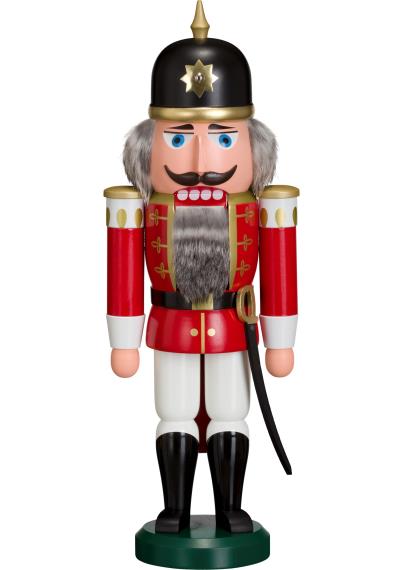
This led the villagers of Erzgebirge to find new creative ways to make money since wood was abundant, and they started using woodworking as a new skill. This led to the production of wooden toy figurines inspired by the workers of Erzgebirge, such as the miners, soldiers and farmers. Today, the most iconic German figurine is the Nutcracker doll, a symbolic icon of Erzgebirge.
The Wooden Toys of Erzgebirge
The Erzgebirge town of Seiffen is the most famous area for wooden crafts and still produces a range of wooden toys, figurines, and Christmas decorations today. Woodworking traditions are still passed through from generation to generation, and today, many wooden figures are still inspired by the animals and nature in the Erzgebirge region and create figurines to illustrate the history of the Ore Mountains villages and experiences in the mines.
The Nutcracker and The Miner dolls are the most well-known toy figurines from German wood-crafting and are still popular and well-loved to this day.